01
Download the app.
Install Fairness-First AI on your computer. No ads. No spyware. No tracking. No login required. No forced updates.
No prompt engineering. No programming. Just drag-and-drop to form its causal memory.
The app runs locally on your computer. Start with one of the included examples, watch the model learn, then interact with what it has learned and inspect the evidence behind it.
Install Fairness-First AI on your computer. No ads. No spyware. No tracking. No login required. No forced updates.
Start with text, raw speech audio, or raw video. The examples are intentionally different so you can see the same learner encounter different kinds of environments.
The system experiences the data in order. It has no concept of language, audio, or video. Useful distinctions emerge only from interaction and observed effects.
Ask what the model expects to happen next or how its internal state responds as the stream unfolds. Then inspect the lineage of distinctions that led to the current state.
After training, give it a new prompt. Inference is the exact same process as training, just the model's response to new unseen interactions.
Train on classic literature from Project Gutenberg. The model sees bytes in sequence, not words or tokens. Readable language is simply the human-facing trace of which boundary interactions it learns to expect next.
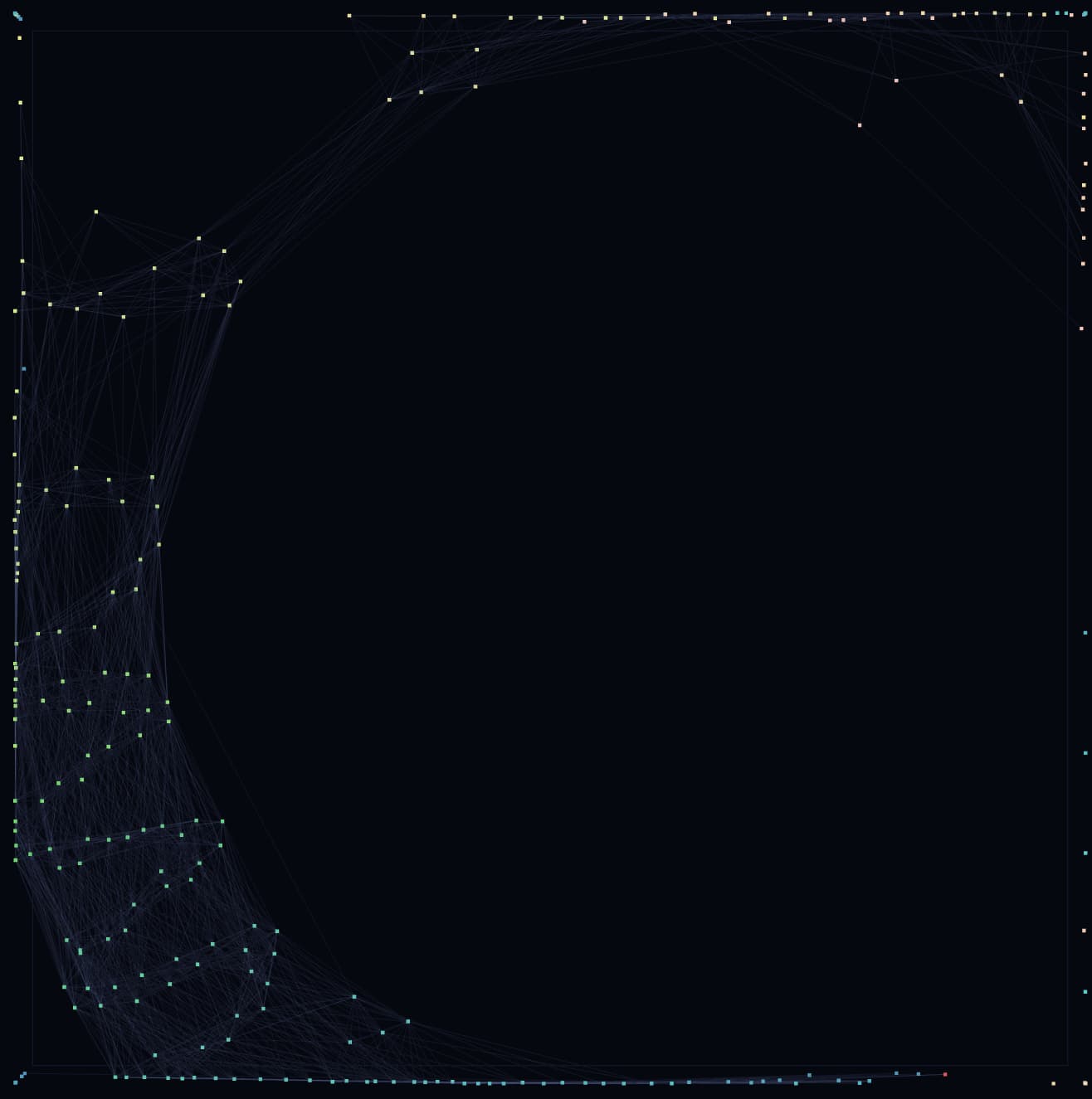
Train on raw speech audio from LibriSpeech. There is no transcript inside the learning loop. The system encounters the changing signal and has to discover which distinctions matter to future interactions.
Train on raw research video of controlled, choreographed scenes. This makes the learned structure easier to inspect because motion, recurrence, and shared visual causes are known to the experimenter.
Train on outputs from quantum mechanics experiments, then ask it to blindly predict the next measurement outcome without knowing the underlying physics.
The system naturally self-organizes to preserve its own coherence in a noisy, driven environment. No explicit rules, loss function, or programming is needed.
Expose the learner to abstract reasoning examples, then ask it to solve new unseen problems. The system must discover relational patterns purely through observation.
A byte, sound sample, pixel value, or other accessible event arrives through the system's interface.
The event encounters the same maintained causal object. What happens depends on the state built by prior experience.
The system does not need to preserve a literal copy of everything it has seen. Past influence survives through the distinctions it has changed.
An external readout asks which accessible boundary interaction is most consistent with the causal configuration now present.
A predicted event can be fed back through the same boundary, changing the state again. Generation is continued interaction, not retrieval of a stored script.
t changes the state. Then h changes that state. Then e changes it again.
After those three interactions, the system is in a particular causal state because of what it has experienced. There does not need to be a memorized string called 'the' that inference searches through.
The readout asks a simpler question: "Given the state the learner is in now, what boundary interaction tends to come next?"
If the predicted interaction corresponds to the byte label for 'r', that event is fed back through the same boundary. The system changes again, and the next inference is made from the new state.
Three chronological interactions alter one maintained causal state space.
The readable byte is just our label for one possible next boundary interaction.
If two very different histories leave the learner in the same causally relevant state, their literal differences no longer need to matter. The model can discard them as equivalent for what comes next. This results in massive computational savings.
Two sequences with the same recent ending can produce different future expectations when their earlier experience left different causal structure behind.
Text bytes, sound values, and visual measurements are labels at the interface. Internally, the system maintains distinctions created by their causal consequences.
The same conceptual cycle applies whether the human-readable environment happens to be prose, speech, video, or something else entirely.
The included datasets are there to make the first experience easy. Once the workflow makes sense, the interesting part is teaching the learner something we did not prepackage for it: